
The people and thinking behind The Second Summit

Photo by Jodi Davies
The Second Summit has grown out of the contributions – in the form of ideas, advice and practical support – of a great number of people. Some of them have never heard of it, or of me for that matter, while others have been personally and consciously involved. What follows is intended partly as a way to thank them all, and partly as a way to show my work by acknowledging its sources and influences. The people on this list do not necessarily vouch for my work (they may not even know it, especially if they’re unavoidably dead) but I can vouch wholeheartedly for theirs.
David Brooks
David Brooks is a columnist for The New York Times and the author of book, The Second Mountain, that was given to me by my business partner, Fiona Czerniawska, when I left the business that we ran together to strike out on a new journey. The name of his book should tell you everything you need to know about its influence on my work.
William Bridges
William Bridges’ book Transitions – Making Sense of Life’s Changes was first published in 1980 and has sold more than 500,000 copies. He has helped me to understand that the messy, confusing, scary part between where you have been and where you’re going is precious indeed.
Jodi Davies
One morning in November 2025, Jodi and I walked out together into a frosty landscape, as low sunbeams from the rising sun hit mist and ice and pine. Jodi’s extraordinary talent with a camera did the rest.
Tristan Gooley
Tristan Gooley is a British author, explorer and natural navigator, and is the only living person to have flown solo and sailed single-handedly across the Atlantic. He teaches navigation skills – some of which I have learned – that require the student to deepen their relationship with the world around them in a way that, even if it wasn’t practical, is profoundly beautiful.
Melanie Harrison
Melanie Harrison is the co-founder of thinking fox and helped me to build a beautiful brand and a beautiful website, often asking for nothing in return.
Naomi Klein
Naomi Klein a columnist for The Guardian and the author of several books including 2014’s This Changes Everything. Which played an important role in changing everything for me.
Nancy Kline
Nancy Kline is the author of Time to Think and runs an international leadership development and coaching company that goes by the same name. Her central idea is that we need to, and can, help people to think for themselves, and that the consequences of this are far-reaching. I will soon be taking my first steps towards becoming a Thinking Environment practitioner under the auspices of her organisation.
Mark Manson
Mark Manson is an American author, blogger and entrepreneur. He’s most noted for his book The Subtle Art of Not Giving a F*ck, which is chock-full of wisdom, a perfect antidote to the current zeitgeist, and resonated with me at a time when little else did.
Phil Parker
Phil Parker created The Lightning Process, which uses approaches developed in the fields of Cognitive Behavioural Therapy and Neuroplasticity to bring about fast and dramatic change for people who are dealing with a range of physical and mental conditions. I undertook The Lightning Process myself in 2025 and now understand a lot more about what can be achieved when you interrupt negative thought patterns and replace them with positive ones.
Priya Parker
Priya Parker is a strategic advisor, conflict resolution facilitator and the author of The Art of Gathering: How We Meet and Why It Matters, which has had a lasting influence on any work I do that involves bringing people together.
Pierre Rabhi
Pierre Rabhi was a French-Algerian farmer, author and the founding father of the Agroecology movement. His teachings about restraint, which lie at the heart of his philosophy of “la sobriété heureuse” (fulfilling sobriety), are one of the rocks on which The Second Summit is built.
Kate Raworth
Kate Raworth is an Oxford academic and author of Doughnut Economics, which set out the case for rethinking how we approach and understand economics in the 21st century. Her work has direct applicability to our work on The Second Summit through its thinking on sustainability and the agency of individuals in bringing about systemic changes.
James Rebanks
James Rebanks’ book, English Pastoral, should, in my opinion, be required reading for every school child in Britain. His is the story of our recent relationship with the land, or at least with agriculture, told by the person best-placed to tell it: an eloquent and excoriatingly intelligent farmer. For our purposes, his writing, including in The Place of Tides, sets out a template that many may find useful in rethinking the nature of work and their relationship with it.
Richard Rumelt
I am, at my professional heart, a strategist, and the work of Richard Rumelt – professor emeritus at the UCLA Anderson School of Management – has shaped my understanding of strategy more than any other. Though the ideas that he set out in Good Strategy, Bad Strategy, are now more than 15 years old, they remain evergreen and are something that I’ve taught business leaders and individuals through my own work for many years.
Katie Seaman
Katie Seaman is a mindfulness coach and one of the most lucid big-picture thinkers I know. I have rarely, if ever, met someone who’s view of the world so closely aligns with my own, and her input into the thinking at the heart of The Second Summit has been invaluable.
Tom Standage
At the heart of my view of the world is the idea that the birth of agriculture, 12,000 years ago, was the moment at which we started to treat the natural world as something from which we were distinct and which could be exploited for our own ends, and that we’ve been harming ourselves and nature as a result ever since. Tom Standage, author of An Edible History of Humanity, tells the story of this critical moment in time with enormous clarity, providing clues as to why we’ve ended up where we are today and what we might do about it.
Anna Sundt
Anna Sundt is a Chartered Psychologist, an expert in people and culture, and an artist. She’s helped me to think carefully about what The Second Summit is and isn’t, and to understand my relationship with it.
Eckhart Tolle
Eckart Tolle’s work to describe the ego and promote the idea of living in the “now” has been one of most important pieces of kit I’ve carried with me as I’ve struck out to find a new path in life. If you asked me to compile a book list for each of my clients, I suspect A New Earth would make more appearances than any other.
Dr Ellen Vora
Ellen Vora wrote a book called “The Anatomy of Anxiety” that makes a compelling case for existence of two forms of anxiety: One that’s real, designed to keep us safe, and that needs to be cherished, and the other that’s caused by a physical response to the crazy stuff (particularly food) we throw at our bodies. For anyone dealing with anxiety as they struggle to find their path, and not dealing with things like their diet, this book probably ought to be essential pre-reading.
Paramhansa Yogananda
Paramhansa Yogananda was an Indian yogi, guru and spiritual master who is considered to be the father of Yoga in the West and has had a greater influence on my spiritual life and beliefs than any other person.
Along similar lines...
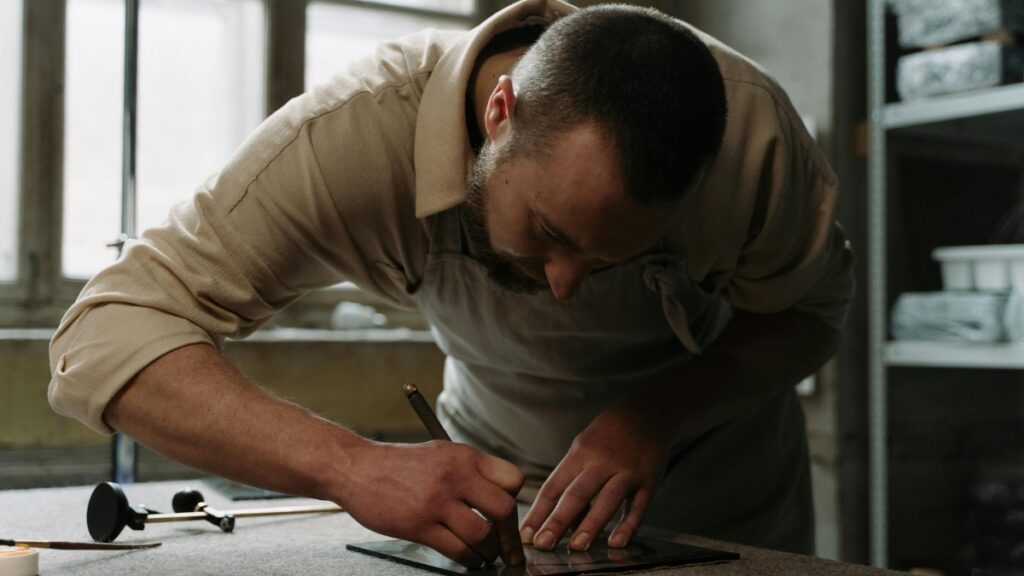
The joy of doing things well
In a world obsessed with outputs, we're forgetting the joy that can come from taking the time to do things...

The businessman and the fisherman
Nothing else sums it up quite as well. It really is this simple.
Along similar lines...
The joy of doing things well
In a world obsessed with outputs, we're forgetting the joy that can come from taking the time to do things...
The businessman and the fisherman
Nothing else sums it up quite as well. It really is this simple.